The Pigs Behind the Pastries: Meet Regeneration Acres
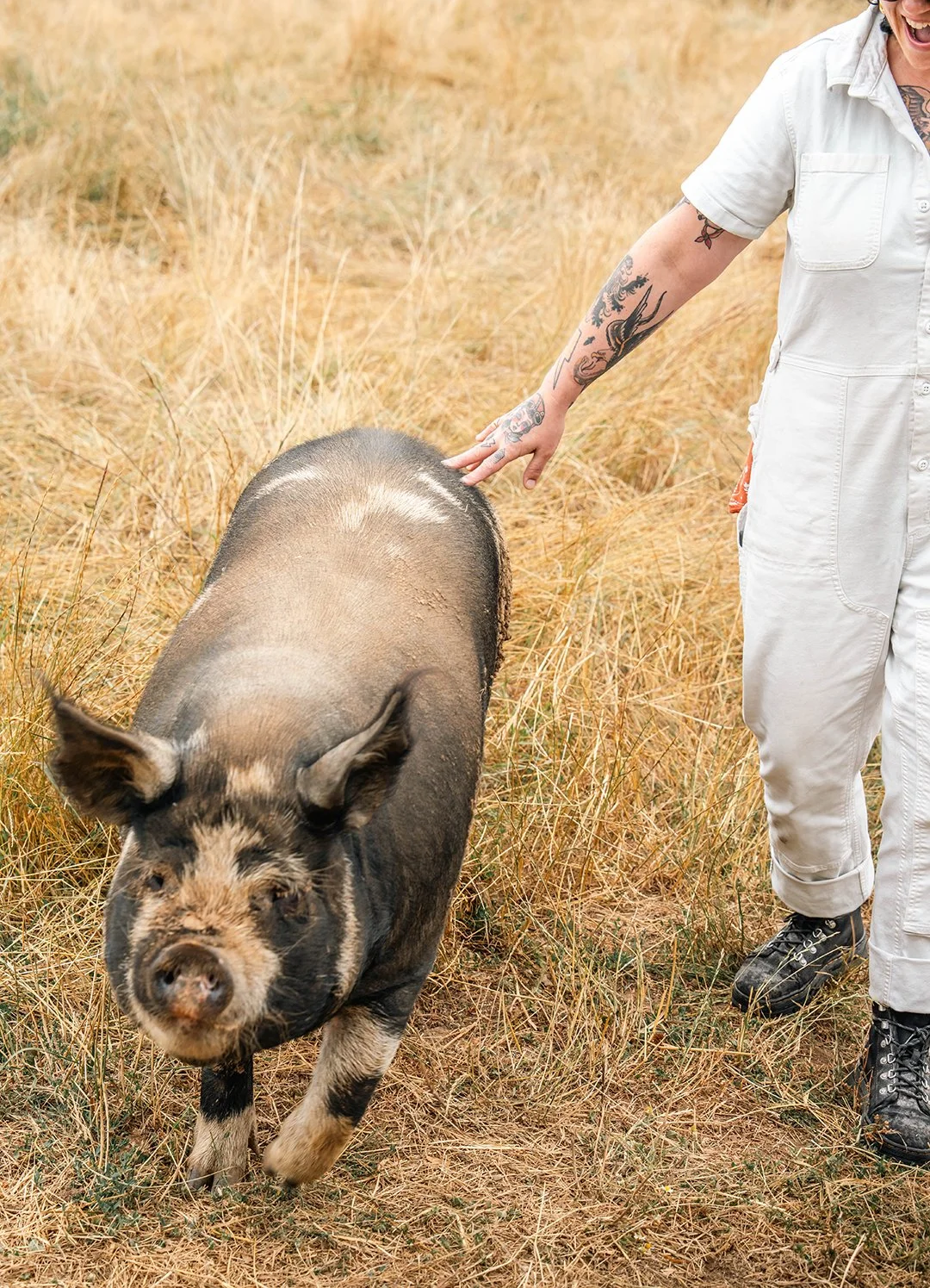
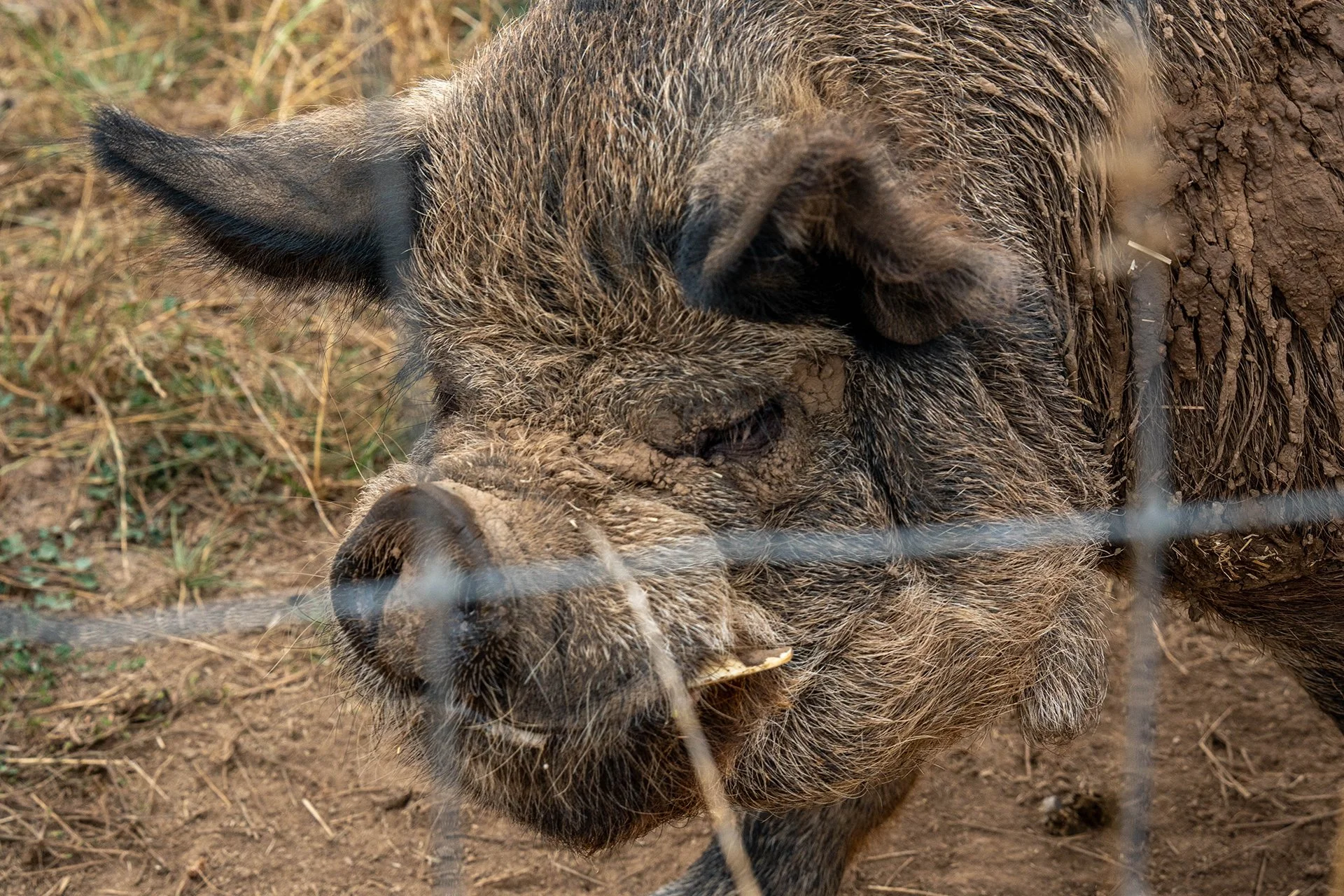
Pedro has tusks like a tiny warthog and the swagger of an animal who knows he's the boss. He's a boar living out his best life on a small farm in Onalaska, and as of last week, he's officially one of our favourite animals in Lewis County.
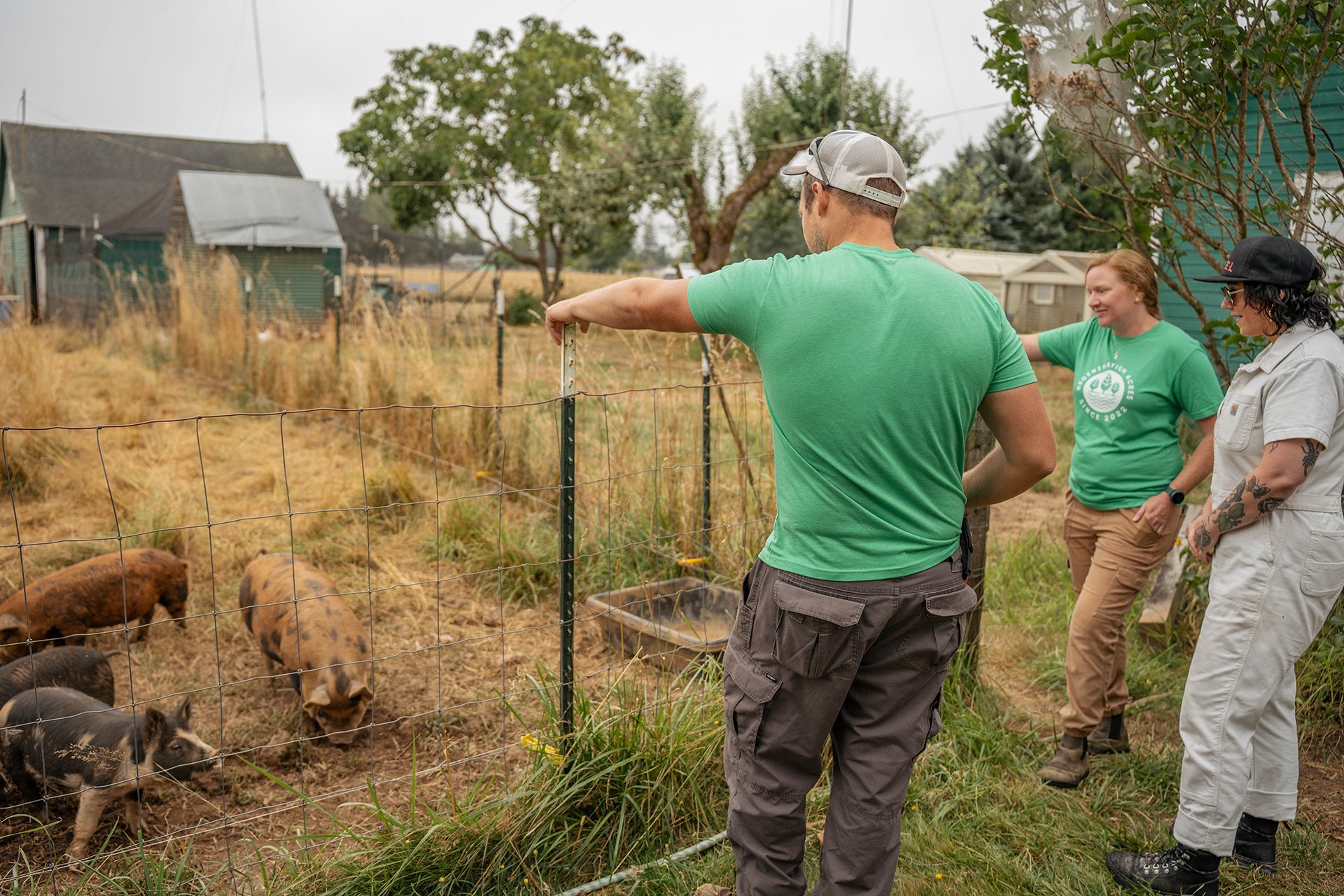
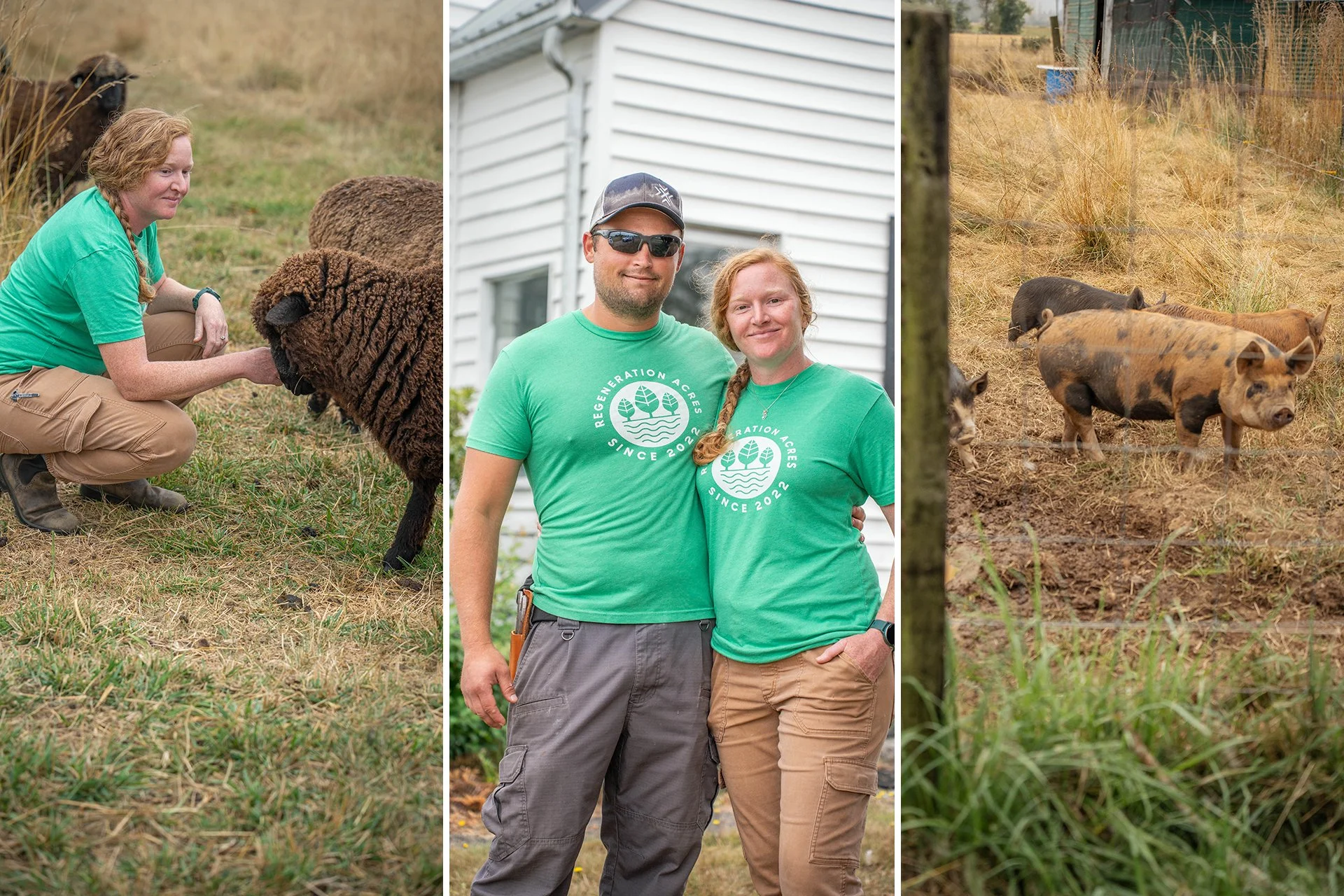
We went out to meet Pedro, his pasture-mate Dahlia (a first-time mum, due in a few months), who actually belongs to the neighbours, the Johnstons, of Goldfinch Farms. Chris and Hannah Volmert of Regeneration Acres buy piglets from them and raise them out at Goldfinch until they’re ready for the processing. It's as good an example as any of how these three farms work out there: nobody's doing this entirely on their own.
If that sounds a lot like how we run things at the café, you’re not wrong. Building community by supporting each other is the bedrock we’ve built this business on, and that pork is a very important component in the sausage roll we can never take off the menu.
A proper little community
Regeneration Acres sits on a quiet stretch of Onalaska, one of three small farms run by veterans who've turned into neighbours in the way real farmers support each other in Lewis County. When Chris and Hanna hay their fields, the neighbour's pigs come over to help Regeneration Acres’ sheep graze it down. When their own pigs need forage, they send them across the road in return. Nobody's writing invoices or keeping track of who owes who a favor. It's just how farming used to work, and apparently still does, if you find the right people.
Pigs that actually live like pigs
The pork from Regeneration Acres comes from Idaho Pastured Pigs, a trifecta cross of Berkshire, Duroc and Kunekune bred specifically to forage on grass (not concrete). Their snouts are built to root without tearing the land apart. And critically, there's no corn or soy in their diet. They’re fed non-GMO grains only, which sounds like a small detail until you taste the difference it makes in the fat, which ultimately ends up in that sausage roll, or pork pie. Soy-fed pork tends to taste flat. The pork from Regeneration Acres doesn't.
A farm that thinks in decades
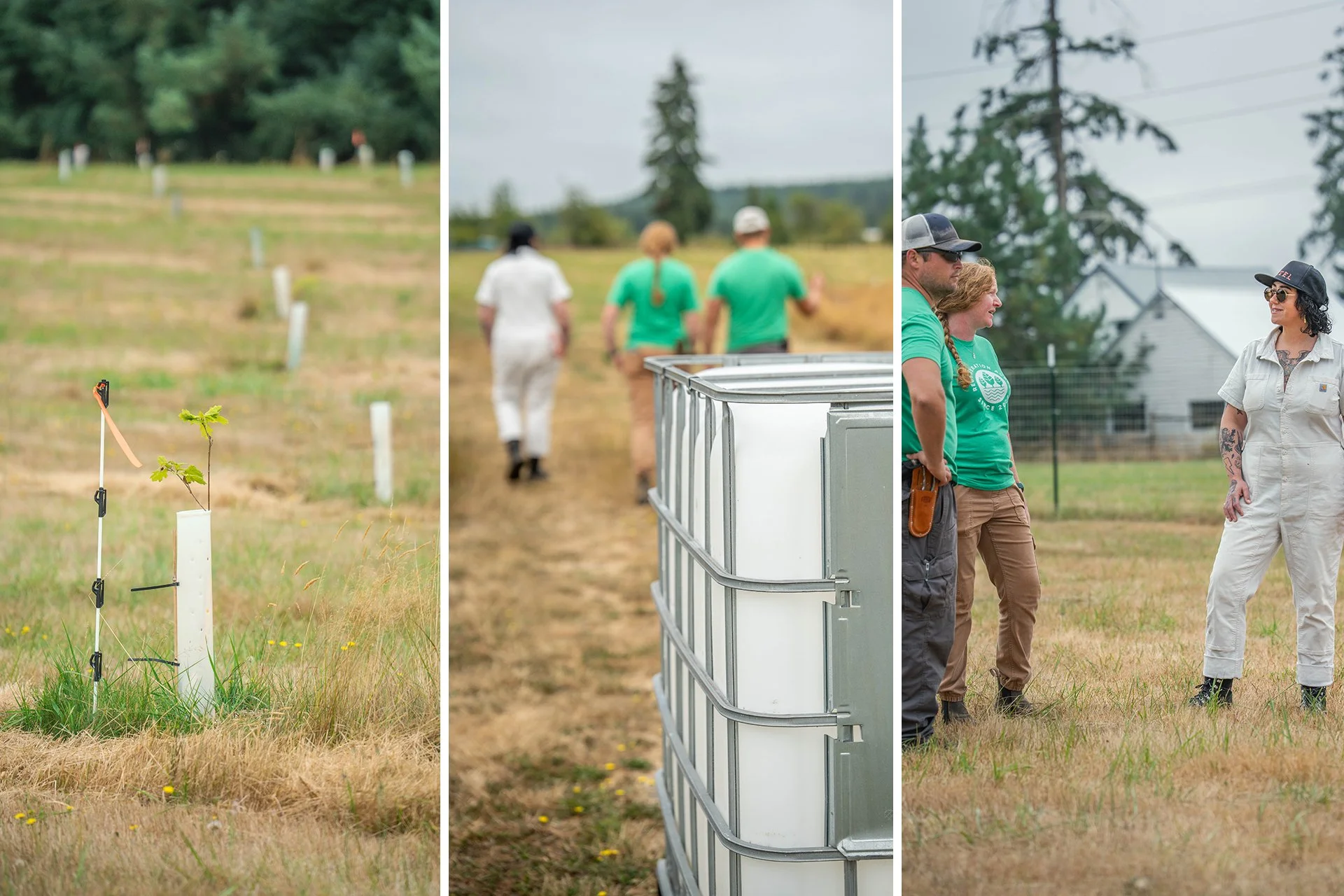
Behind the pasture, Chris and Hanna are deep into a silvopasture project, which is a fancy way of saying they're growing trees, forage and livestock on the same ground so all three feed into each other.
The project started small with half an acre in 2022— about 30 trees, and a little more the year after. This year, thanks to the Catalyzing Agroforestry Grant Program, they put in 200 trees across five acres: chestnut, oak, mulberry, and American persimmon. Give it a few years and those trees start dropping food straight into the pasture for the animals to eat.
For now they're hand-watering hundreds of saplings from a water tote, one at a time, because there’s no irrigation system built out yet, and that's what it takes.
That's not a quick win. That's a family betting on their own patience when it comes to building their business. It’s a concept we’re very much aligned with here at the café, and why we choose to partner with businesses that align in the same way.
Why it costs what it costs
Pasture-raised pork isn't cheap, and there's a real reason for that (please see watering 200 trees by hand above). Small USDA processors are few and far between (Chris and Hanna drive theirs down to Sandy, Oregon), and farms like Regeneration Acres are often booking processing dates before the animals are even born.
Raising an animal slowly, on grass, without shortcuts, takes labour that a bag of commodity feed doesn't. Knowing exactly where your dinner came from is worth something. We think it's worth quite a lot, actually.
What this means for the case
This is the pork going into our sausage rolls and pork pies from here on out: hand-rolled and made from scratch every morning the same way they've always been, now with meat we've watched grow up just down the road in Onalaska.
Chris and Hanna are also documenting their whole silvopasture journey in their farm newsletter, worth a read if you want to see what a farm looks like when it's built for the next ten years instead of the next ten weeks.